


LEGO® Jurassic World™
Warner Bros. International Enterprises
LEGO® Jurassic World™ is the kind of adventure game I reach for when I want something familiar, playful, and easy to share with a younger player. It brings the Jurassic Park and Jurassic World stories into a LEGO-style format, with humor and light action replacing the heavier tone of the films. I tested it as a compact story game rather than as an endless progression title, and that distinction matters: its appeal comes from replaying recognizable movie moments, collecting things along the way, and enjoying the charm of the LEGO presentation.
Warner Bros. International Enterprises released it as a paid game for Android, priced at $4.99, with an Everyone 10+ content rating. It belongs to the adventure category and has attracted more than 500 thousand installs, while its average rating sits at 3.8 from roughly 23 thousand ratings and 2 thousand reviews. Those figures suggest a game with a substantial audience but also some divided reactions, which matches my experience: the core adventure is enjoyable, yet the practical side of installing, resuming, and playing it smoothly can affect how much fun you have.
What the adventure feels like in everyday play
The main attraction is the combination of dinosaur spectacle and LEGO comedy. Familiar scenes are presented with exaggerated expressions, slapstick timing, and the satisfying visual language of LEGO games. Instead of taking every dramatic moment seriously, the game turns danger into a reason to smash objects, solve a small environmental problem, or watch a character react in an amusing way.
I found the tone especially suitable for players who enjoy the films but do not want a frightening dinosaur game. The age rating of Everyone 10+ gives a useful indication of the intended audience: this is family-oriented entertainment, although very young children may still need help with reading, navigation, or understanding what the game expects them to do next.
The adventure structure works best in short sessions. You can play through a story section, stop, and return later without needing to commit to a long uninterrupted sitting. That makes it a reasonable choice for a weekend trip, a quiet afternoon, or a parent and child taking turns with the controller. I would not choose it as my first option for someone looking for a deep role-playing system, competitive multiplayer, or an open-ended dinosaur simulation. Its focus is guided adventure with LEGO-style exploration.
Related News

Threads in Real Life: Who Should Join, Lurk, or Leave

How SHEIN Turned Shopping Into an Endless Content Feed

How to Make Fortnite Feel Smarter on Mobile

Should You Switch to Microsoft Outlook on Mobile?

Why Gallery Keeps Pulling Users Back

X Review: Why Its Network Still Matters
One useful way to approach it is to treat the first pass as a tour through the story rather than an attempt to complete everything. The levels are more enjoyable when I follow the immediate objective and let the collectibles come naturally. Trying to inspect every corner before understanding the route can make the pacing feel slower, particularly when I am playing on a small phone screen.
Why the LEGO format works here
Dinosaur games can easily become either too intense or too technical. This one softens the subject through visual jokes and simple interaction. Breaking scenery is not just decoration; it gives the player a steady rhythm between story moments. I move forward, look for something that can be interacted with, solve a small obstacle, and continue. That rhythm makes the game approachable without making it completely passive.
The humor also gives the game a personality that a straightforward film adaptation might lack. Even if I already know the broad story beats, the LEGO treatment creates small surprises in the way characters move and respond. That is a genuine strength for family play, because a child who is not following every plot detail can still understand the physical comedy and enjoy the dinosaur encounters.
Gallery
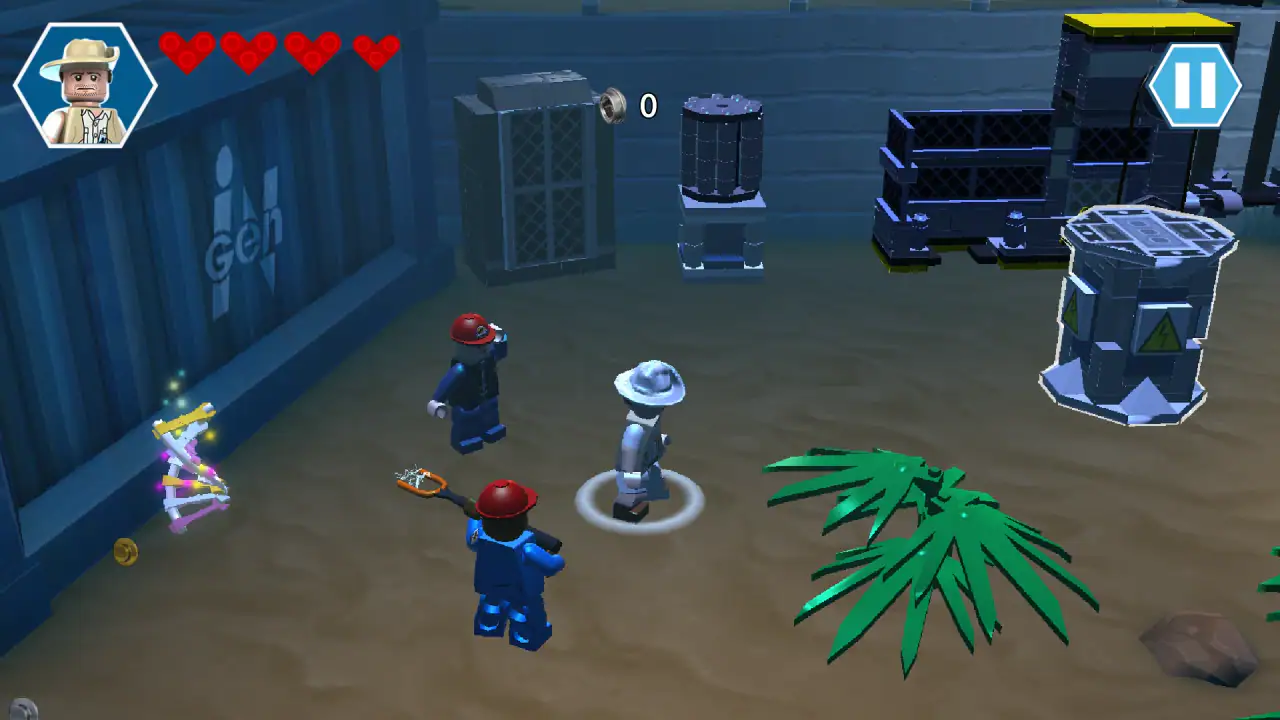
There is a trade-off, though. Players who want serious survival tension may find the danger too gentle. The game is built around playful adventure, not fear. Likewise, anyone expecting a modern open-world experience may find the guided levels and repeated interaction patterns limited. I think the right question is not whether it is the most advanced dinosaur game available, but whether its particular mix of licensed adventure, LEGO humor, and accessible objectives suits the person holding the device.
Where players can get stuck before the fun begins
The first obstacle may appear before the opening level: installation and startup. Because this is a paid mobile game, I would check the purchase account and the device requirements before troubleshooting anything inside the game. The listed minimum operating system is Android 5.0, and the current version is 2.2.1.82. If the device is older, heavily customized, or short on available storage, the problem may be the setup rather than the adventure itself.
I recommend installing it while connected to a stable Wi-Fi network and leaving enough free space for the download and installation process. A store page can show that a game is compatible while the actual device still struggles because of storage pressure, background activity, or an operating-system issue. Closing demanding apps first is a simple step that can prevent a false impression that the game itself is broken.
Another common point of confusion is expecting the first launch to behave like a lightweight puzzle game. A licensed 3D adventure may take longer to open than a basic app, and a brief pause during startup does not automatically mean that the installation failed. I give it a moment, then check whether the device is responding normally before trying repeated launches.
The most useful setup habit is to separate account, device, and game problems before changing anything. If the store does not recognize the purchase, that is different from a game that opens and then closes. If the game opens but a level does not progress, reinstalling immediately may be the wrong first move, especially if local progress could be affected.
Simple checks that save time
When I prepare a device for this game, I use a short order of checks. First, I confirm that the device uses at least Android 5.0. Next, I make sure the purchase is being accessed through the account that obtained the game. Then I restart the device, close other apps, and try again with a reliable connection. These steps are ordinary, but doing them in order prevents random changes that make the original problem harder to identify.
If the game installs but refuses to start, I would check for pending system updates and available storage before touching saved data. I also avoid switching rapidly between several accounts during setup. That can make it unclear whether the issue is licensing, installation, or the game itself. A clean restart after confirming the correct account often tells me more than repeatedly tapping the icon.
For families, I would complete the first launch before handing the phone or tablet to a child. That lets me confirm that the game opens, that the controls feel practical on the screen, and that the device can run it without obvious strain. It also avoids turning a shared play session into a technical support session.
The paid price changes the decision slightly. At $4.99, I would not treat it like a free trial that can be casually abandoned after a difficult installation. I would first verify that the device and account are ready, then download it when I have time to test the opening section. That is particularly sensible if the game is intended as a gift or a shared family purchase.
Recovering a session without making things worse
When a level seems stuck, I first retrace the immediate objective instead of assuming the game has failed. LEGO adventures often use environmental interaction as the solution: an object must be broken, assembled, approached from another angle, or activated by the appropriate character. A quick sweep of the nearby area can reveal that the next step is simply outside the camera angle or behind scenery that blends into the background.
This is where patience helps. I have found that rushing through a scene can make a small interaction easy to miss, while standing still for a moment lets the visual cues become clearer. I also try moving away and returning to the objective before restarting the entire level. That lightweight recovery step is safer and often enough when a character has been positioned awkwardly.
If the game stops responding, I would close it normally, restart the device, and reopen it before clearing data or reinstalling. I would reserve more disruptive actions for a problem that persists across launches. Reinstalling may solve corrupted installation files, but it can also create unnecessary uncertainty around local progress. I would not erase saved information casually when the only symptom is a temporary freeze.
For a shared device, it helps to establish a simple recovery routine: finish a scene when possible, exit cleanly, and avoid forcing the app closed while it is changing areas. I cannot promise that this prevents every issue, but it reduces the number of variables when something goes wrong. It also makes it easier to tell whether a problem follows one particular level or appears everywhere.
Another practical tip is to distinguish a control problem from a progression problem. If the character moves but an action does not register, I check positioning and try the interaction again. If the whole game stops reacting, I treat it as a stability issue. That distinction keeps me from wasting time searching for a hidden solution when the device simply needs a restart.
When the phone or connection is the real issue
Not every disappointing session is caused by the game. A crowded device can make any 3D title feel unreliable, especially when several apps are active in the background. If the game performs better immediately after a restart, that points toward device workload rather than a particular story section. I would also test the game with the device cool and adequately charged, since heat and low power can affect general performance.
A weak connection can complicate downloading, account checks, or updates, but it does not explain every in-game problem. Once the game is installed, a level that fails to advance may be unrelated to Wi-Fi. Conversely, if installation repeatedly pauses or the store cannot verify the purchase, I would focus on the connection and account first rather than blaming the dinosaur adventure.
Screen size is another overlooked factor. On a larger tablet, environmental details and touch controls are easier to read. On a smaller phone, I may need to slow down and use the camera more deliberately. That does not make the game unusable, but it changes the comfort level. Someone buying it specifically for a child should test whether the intended device makes characters and prompts easy to see.
I would also be realistic about age and expectations. The game is accessible, but accessibility is not the same as complete simplicity. A child may understand the jokes and enjoy smashing objects while still needing an adult to explain an objective or guide the character through a more confusing area. That can be a positive shared activity, but it is worth knowing if the goal is independent play.
How it compares with other adventure choices
Compared with a free-to-play adventure, this game is easier to understand as a complete purchase: I pay once and approach it as a contained LEGO journey rather than a service competing for daily attention. That is appealing when I want a family-friendly game without building a routine around repeated check-ins. The compromise is that the experience does not offer the same kind of ongoing novelty that a constantly updated free game might provide.
Compared with a serious dinosaur survival title, it is far less demanding emotionally and mechanically. There is no reason to choose it if the main attraction is hunting for resources, managing survival pressure, or creating a personal world. I choose it for guided storytelling, recognizable Jurassic settings, and the satisfaction of LEGO-style destruction and discovery.
Compared with other licensed LEGO adventures, its strongest identity comes from the dinosaurs. If someone already enjoys the LEGO formula, that theme may be enough to make it worthwhile. If they are tired of repeating the familiar pattern of moving through scenes, breaking objects, and solving straightforward obstacles, the Jurassic setting may not fully overcome that repetition.
That comparison also explains why the average rating of 3.8 feels understandable. The concept is appealing and the presentation has real charm, but mobile performance, controls, and expectations about depth can vary from player to player. I would recommend it more confidently to a fan of Jurassic stories who enjoys LEGO humor than to someone choosing purely by genre label.
Who should install it, and who should skip it
I think it is a good fit for a player who wants a recognizable adventure that can be enjoyed in manageable sessions. Families may appreciate the light tone, while adult fans can enjoy spotting how serious film moments are transformed into visual jokes. It is also a sensible choice for someone who prefers buying a focused game instead of sorting through a large catalog of free downloads.
I would skip it if the priority is competitive play, a large sandbox, deep character development, or a demanding survival experience. I would also hesitate if the intended device is old, nearly full, or uncomfortable for 3D touch controls. The game may still install, but technical friction can overshadow the fun, and a different platform or a less demanding title could be a better match.
For a realistic everyday scenario, imagine a parent downloading it before a long family journey. I would install and launch it at home, confirm that the purchase is recognized, test the opening controls, and make sure the child knows how to pause and resume. That preparation matters more than it sounds: discovering an account or installation problem in the car is much more frustrating than discovering it beside a stable Wi-Fi connection.
For solo players, I would use the same principle in reverse. Start with a short session and ask whether the humor, movement, and level rhythm are enjoyable before committing to a completion-focused run. The game is at its best when I accept its playful pace. It becomes less satisfying when I demand the complexity of a full console adventure from a mobile LEGO adaptation.
My practical verdict
LEGO® Jurassic World™ remains an appealing adventure for the right audience. Its combination of dinosaurs, recognizable storytelling, and LEGO comedy makes it approachable, and the paid model gives the experience a clear, contained purpose. I especially like it as a shared game for a child and an adult, where solving a small obstacle together is part of the entertainment rather than an interruption.
My recommendation comes with a setup condition: prepare the device first, confirm the account and installation, and use gentle recovery steps before deleting anything. Most frustration is easier to manage when I separate technical issues from gameplay confusion. The game rewards a patient approach, particularly when a level appears to stall and the solution is simply a missed interaction nearby.
The current version, 2.2.1.82, supports the practical decision to check compatibility before buying, especially on older Android hardware. I would not promise a perfect experience on every device, but I would say that the game is worth considering for Jurassic fans who want a humorous, family-oriented adventure rather than a serious dinosaur simulation.
In the end, I would recommend it to a friend who enjoys licensed LEGO games and wants a relaxed way to revisit Jurassic adventures. I would point a player seeking depth, competition, or open-ended survival elsewhere. For everyone in between, the best approach is simple: install it on a prepared device, play the opening section without rushing, and judge it by the playful adventure it actually offers. Its biggest strength is not complexity; it is the easygoing combination of dinosaurs and LEGO humor.
FAQs for LEGO® Jurassic World™
What is LEGO® Jurassic World™?
LEGO® Jurassic World™ is an adventure game that retells memorable moments from the Jurassic Park and Jurassic World movies in a humorous LEGO style. Players can explore different locations, collect items, solve environmental puzzles, and control a variety of dinosaur characters. The game combines story-driven missions with light platforming and family-friendly action, making it suitable for fans of both LEGO games and dinosaurs.
Which devices can run LEGO® Jurassic World™?
The game is available for supported Android and iOS devices, but compatibility can vary depending on the operating system version, available storage, and device hardware. Because it includes detailed 3D environments and animated dinosaurs, older phones and tablets may experience slower performance or may not support the installation. It is best to check the current store listing before downloading and ensure that sufficient free space is available.
Is LEGO® Jurassic World™ suitable for children?
LEGO® Jurassic World™ is generally designed with a family-friendly tone, featuring cartoon-style action, playful humor, and simplified combat rather than realistic violence. However, parents should still review the age rating shown in their region, since ratings and content descriptions can differ between platforms. The game may also include optional purchases or advertisements, so parental controls are recommended if children will be playing.
Does LEGO® Jurassic World™ require an internet connection?
An internet connection may be needed to download the game, install updates, verify access, or use certain store-related features. After installation, much of the main gameplay can typically be enjoyed offline, which is useful when traveling or playing without mobile data. Online requirements can change with updates, so players should consult the official Google Play or App Store description for the latest information.
Are there in-app purchases in LEGO® Jurassic World™?
Depending on the edition and platform, LEGO® Jurassic World™ may be offered as a paid download or may include optional in-app purchases. Before installing, check the store page carefully for pricing, additional content, and any purchase requirements. The core experience is focused on story missions, exploration, collectibles, and character switching, but families should protect payment settings to prevent accidental purchases by younger players.
Pros
- Familiar LEGO humor makes the dinosaur adventure enjoyable for all ages.
- Playable characters offer varied abilities for solving puzzles and reaching new areas.
- Collectible items and hidden secrets encourage exploration beyond the main story.
- Simple controls make the game accessible on phones and tablets.
- Offline play lets you enjoy most of the adventure without an internet connection.
Cons
- The large download size may be inconvenient on devices with limited storage.
- Some levels can feel repetitive after extended play sessions.
- Touch controls may feel imprecise during fast movement or platforming sections.
- Certain characters and extras require significant in-game collecting to unlock.
- Performance may vary on older devices
- with occasional slowdowns or crashes.


